







Mexico, South Africa Open FIFA World Cup 2026, Security Protocols Activated
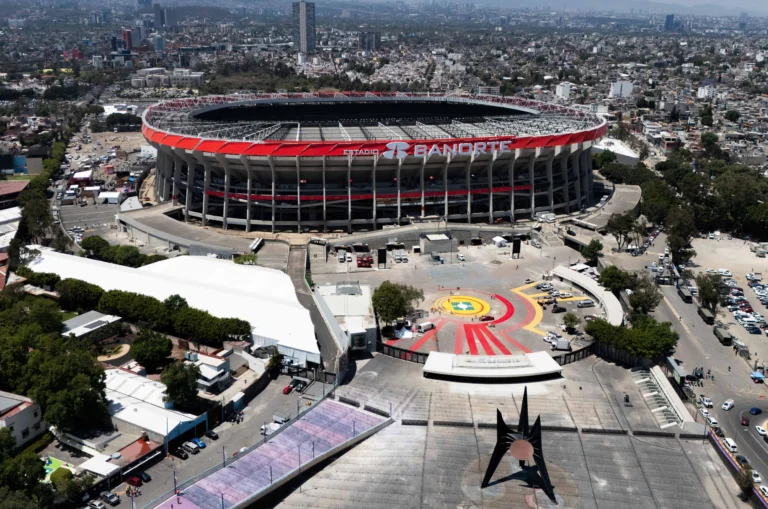
On June 11, the Azteca Stadium will be the first to host three FIFA World Cup openings. Photo: EFE.
April 24, 2026 Hour: 10:45 pm
🔗 Comparte este artículo
Mexico and South Africa will open the expanded FIFA World Cup 2026 on June 11, marking a historic moment as the first tournament with 48 teams.
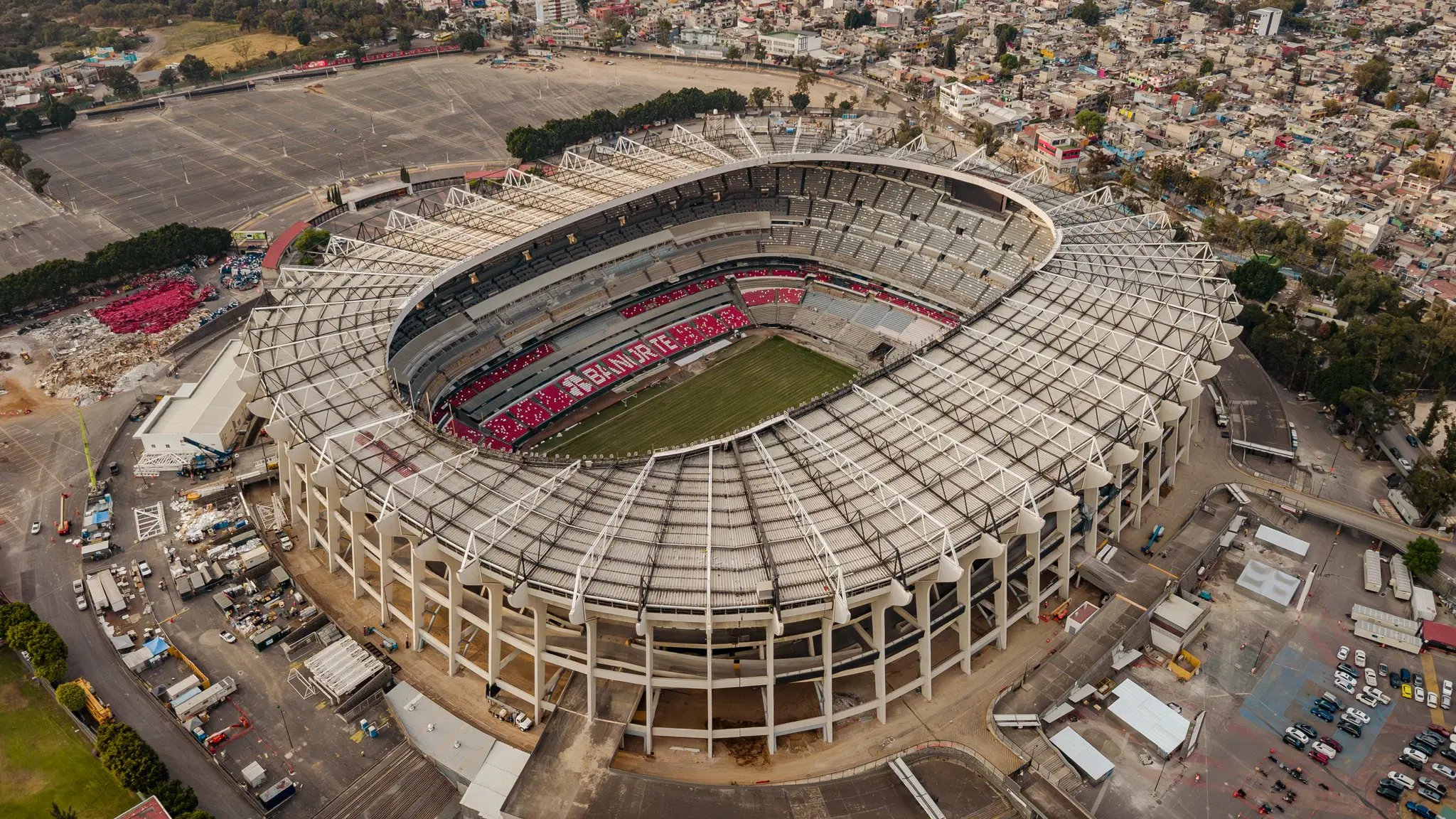
The national teams of Mexico and South Africa will inaugurate the FIFA World Cup 2026 on June 11, at the iconic Azteca Stadium (called Mexico City Stadium now), marking the beginning of an unprecedented edition that will feature, for the first time in history, the participation of 48 national teams.
This opening match not only signals a significant expansion of the global tournament but also an unparalleled moment for Mexican football, showcasing its rich heritage and capacity to host major international events.
RELATED: 2026 FIFA World Cup is Safe in Mexico: Sheinbaum
With this inaugural match, the renowned venue in Mexico City officially becomes the first stadium in the world to host three World Cup opening games. The Azteca Stadium previously served as the stage for the opening ceremonies and matches in 1970, when Mexico faced the ex-Soviet Union in a 0-0 draw, and in 1986, featuring Italy against Bulgaria, which concluded in a 1-1 tie.
This unparalleled achievement cements the stadium’s legacy as a truly historic landmark in the annals of global football, reflecting its deep connection to the sport’s most celebrated moments and legendary figures.
The selection of this venue underscores the paramount importance of regional sporting tradition in a tournament that will be jointly organized by Mexico, the United States and Canada.
The Azteca Stadium’s infrastructure has undergone extensive modernization processes to meet the stringent demands of an event of this magnitude, all while carefully preserving its essential character as a cultural beacon of global sport. This blend of historical significance and modern amenities ensures a world-class experience for both players and fans.
Throughout various eras, the hallowed pitch of this Stadium has borne witness to the triumphs of historic figures such as the Brazilian football player Pelé in 1970 and the Argentinean Diego Maradona in 1986, further solidifying its mythical status within football folklore.
A Duel with Historical Precedents
The 2026 inauguration notably rekindles the memorable confrontation that occurred during the 2010 World Cup in South Africa. On that occasion, Mexico and South Africa battled to a 1-1 draw at Soccer City Stadium in Johannesburg, marking the first World Cup ever organized on African soil.
Sixteen years later, history converges once again, with the Mexicans now serving as hosts, to commence a tournament that seeks to foster the sporting integration of the continent under a new, expanded competitive format.
This match is not merely a sporting challenge for the Mexican squad playing at home; it deeply symbolizes the profound connection between two nations that have proudly hosted football’s ultimate spectacle, showcasing the sport’s unifying power across diverse cultures and continents.
Mexico Enhances Airport Security
The 2026 edition of the World Cup is distinguished by its sheer scale and a fundamental change in its competition structure.
The significant increase from 32 to 48 participating teams necessitates a complete logistical restructuring to accommodate a total calendar of 104 matches. This expanded format aims to broaden international representation, enabling nations that have historically had less participation to access the final stages of the tournament, thereby promoting greater inclusivity and diversity within global football.
Mexico City’s International Airport finalized three-day tactical exercises today strengthening security protocols to ensure traveler safety amidst potential complex threats, with less than 50 days remaining until the highly anticipated inauguration of the FIFA World Cup 2026.
Text reads: “The Mexican International Airport tests protocols towards the 2026 World Cup. Mexico City International Airport conducted high-risk drills, including hijacking of aircraft, hostage taking and attacks with hazardous materials, to assess response times and coordination between authorities, as part of the preparation for international events such as the 2026 Football World Cup.”
These comprehensive drills involved robust coordination with the Secretariat of the Navy (Semar, in Spanish) and various federal institutions, rigorously testing the country’s main air terminal’s response capabilities. The extensive security operation also saw the active participation of the Naval Airport Protection Unit and a specialized team dedicated to the Search, Localization and Neutralization of Explosive Devices (BLONAE). Furthermore, the deployment of the “World Cup 2026 Task Force” was a key component, highlighting the comprehensive nature of the integrated security efforts.
The significant reinforcement of airport surveillance and security protocols is specifically designed to standardize operational protection criteria in anticipation of the massive influx of football enthusiasts expected from diverse regions across the globe.
By prioritizing and strengthening coordination among all security forces and relevant civil dependencies, the objective is to unequivocally guarantee an environment of stability and ensure an immediate and effective response capability throughout the entire duration of the international competition, thus ensuring the safety and enjoyment of all participants and spectators.
This robust preparation underscores Mexico’s commitment to delivering a flawless and memorable football event.
Author: Laura V. Mor
Source: FIFA